
Duo #02: Mike Nawrocki and Phil Vischer
The creators of the smash-hit 90s Christian cartoon ‘VeggieTales’, Phil and Mike, have three major attributes that help explain the show’s success:
- Their weird and wacky sense of humour.
- The ability to craft entertainment with a moral lesson, while being funny and not preachy.
- Their ability to innovate, both creatively and technologically.

The history of the Christian Movie industry since the 1970s is one of individuals and duos more than studios or movements. People who were innovators, breaking ground in storytelling, marketing and technology. Billy Graham. Mel Gibson. The Kendrick Brothers. The Erwin Brothers.
And then, there’s Phil and Mike. Two Christian guys who gave us such stories as “Dave and the Giant Pickle,” “Josh and the Big Wall” and “God Wants Me to Forgive Them!?!”
As explained in Phil’s memoir (Me, Myself and Bob, 2007), Mike and Phil met at Bible College in the late 1980s. Phil has joked over the years that he is a Bible College dropout.
One of VeggieTales’ most popular Silly Songs (a recurring segment) was first written for a puppet show they performed during their Bible College years. It became The Pirates Who Don’t Do Anything. This lazy veggie trio later became the supporting cast in Jonah: A VeggieTales Movie (2002).
Phil came from a family where one of his grandfathers was a radio preacher in the USA in the 1920s. Apparently his grandfather’s program was once described as ‘The largest congregation in America.’
Phil’s mother, Scottie May, was a Children’s Ministry expert who provided some specific rules about what VeggieTales could and couldn’t do with their characters. For example, they weren’t allowed to depict Jesus as a vegetable, or give the impression that vegetables can have a personal relationship with God.

In the 1980s, Phil looked at some of the pop culture aimed at youth in America and saw that the morality therein was undesirable.
Mike and Phil first thought of creating a talk show aimed at teens, with a Biblical worldview, but subsequently decided to make something for younger children instead. It seems they thought this would be easier to get an audience. But of course, VeggieTales had a lot of pop culture jokes that parents and youths would get a kick out of too.
Phil said in his memoir that one of the likely reasons that Christian bookstores sold a lot of VeggieTales videos – as the popularity was increasing in the 90s – was that the young adults working in the music department would play videos on the store TV. They kept putting on VeggieTales when they had a lot of fun watching them. Because maybe they were bored? And didn’t like the other corny Christian kids shows?
Mike’s sense of humour puts normal things in a crazy light. For example, laziness and spending time in the house and eating cereal, is juxtaposed with the culprits being pirates. Or Love Songs With Mr Lunt – where another guy’s hunger for breakfast whips him into a romantic dilemma about betraying the restaurant which was his first love. This becomes a zany metaphor about God loving his children as much as Jerry Gourd loves this cheeseburger.

Mike’s sense of humour is a bit more accessible than Phil’s. Phil’s sense of humour can be really random. A listener of his Holy Post podcast in the 2020s can see that his brain makes connections that not many of us would make. And not all are funny.
And he has a way of making naughty humour seem more wholesome than it is. For example, his News of the Butt segment is on a weekly Christian podcast, which divides the fans, but Phil has persisted.
Therefore it is easy to see why Phil’s joking in Sunday School got him in trouble. And in a way, the humour in VeggieTales is way more edgy than in shows like Odyssey.
In the late 1980s, Phil was reading magazines about the film industry, such as Variety. These publications helped him learn about the upcoming trends in filmmaking, including Computer Generated Imagery. Early on, he got his hands on a digital pixelated light-up sign which he studied, learning how to program it to make basic animations.
Phil was given a large investment of about $80,000 from someone in his church. This enabled him to buy some expensive software that allowed his veggie characters to look easier on the eye, with “squash and stretch” – a movement that was a defining characteristic of Disney animation. This would be better than the stiff solid shapes that featured in early CGI without this technology.
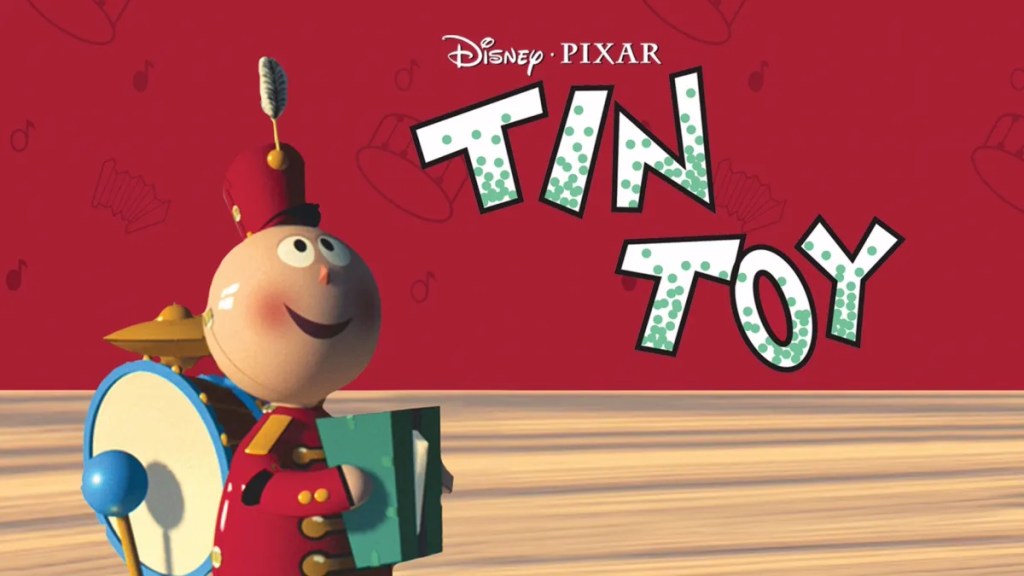
He tells a very funny story about watching the early Pixar Short ‘Tin Toy’ at an industry convention and giving – ahem – “constructive” feedback to John Lasseter about the problems in the stiff presentation of the baby. (Lasseter was a senior person at Pixar, and later Disney Animation, for many years.)
Phil and Mike ended up beating Pixar. As it would happen, the first VeggieTales episode became the first CGI home video in America of its length, almost two years before Toy Story came out.
That aforementioned financial investment, to me, is wonderful but shocking, because it shows that someone really thought that Phil’s goal was worth investing in. However in most local churches there isn’t that kind of money floating around.
In a Phil Vischer Podcast interview with Phil’s wife Lisa Vischer and two other women, Lisa shared how Phil felt he had a big responsibility to do what was in his power to teach children the Bible via media. She shared this in a serious tone, which showed that Phil has taken this responsibility very seriously. Phil has also said publicly that his personality is not suited to leading Sunday School with groups of kids. It is more suited to teaching them at a distance using video media.
Mike wrote many of the Silly Songs throughout the first 20 years of VeggieTales. He also wrote and directed some episodes. The first full VeggieTales episode he wrote was Madame Blueberry, whose hilarity excels in wit and whimsy. After Madame Blueberry has spent thousands of dollars on kitchen goods and home decor, she is asked if she wants to buy another gadget. The writing and delivery of her next line is genius as she realises:
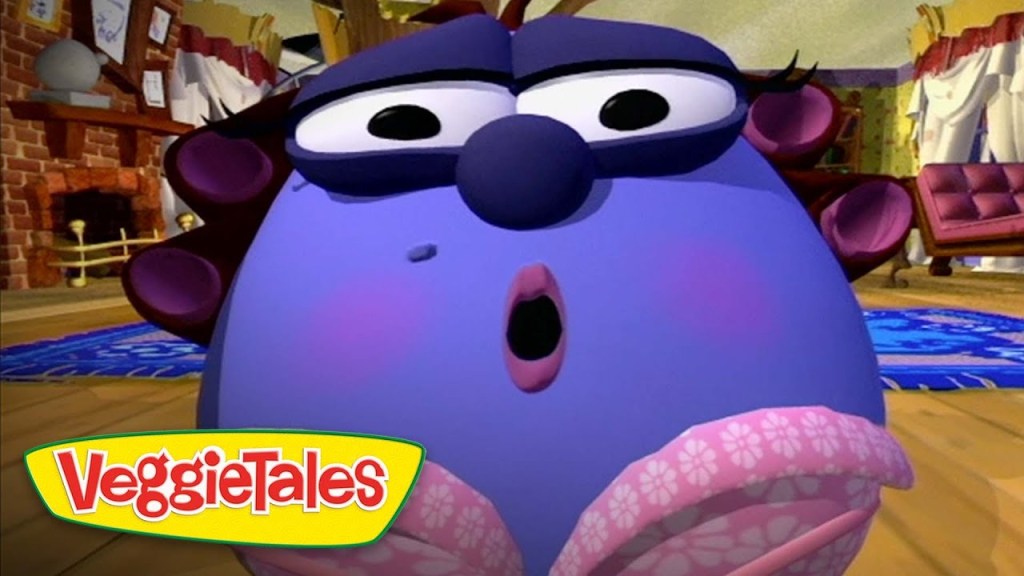
“I don’t need an air compressor.”
Which demonstrates in a hilarious way, that Madame Blueberry has learned the lesson “Don’t be materialistic, and instead be thankful to God.” Epic!
Phil Vischer and Mike Nawrocki defined Christian TV in the 1990s with their computer generated cartoon which told Bible stories and other original morality tales. While other groups, including Focus on the Family, had made some videos around the same time (McGee and Me, Adventures in Odyssey), Phil and Mike’s work included a sharp and hilarious sense of humour that connected with kids, their parents and young adults.
Children might not recognise a reference to Star Trek, but they will enjoy a kid-friendly story in that context.
VeggieTales sold about 25 million videos by the turn of the century, and the stats kept climbing. By 2025 they had sold about 85 million videos/DVDs, and been referenced in The Simpsons and Rick and Morty.
There is a well-documented story of the bankruptcy of Phil’s company, Big Idea Productions, in 2004. He detailed in this podcast what occurred in the following decade. This involved a producer at the newly formed Big Idea Inc. company, who wrote it into his contract that if Phil was hired, this guy would leave Big Idea Inc.. Thankfully that relationship was later resolved. However it was just one in a long series of opportunities he got to – almost – work directly with VeggieTales. It never worked out, and he wondered if that was indeed God’s will.
About 5 years after that interview, he did in fact create a new VeggieTales show with the “Christian” TV channel TBN. He was a producer and writer on it. So I guess that is a nice “full circle” moment for Phil and VeggieTales.
In a beautiful story, Phil once shared online about a depressed dad who heard Bob and Larry say “Remember kids, God made you special, and He loves you very much!” Hearing this encouraged the man and gave him the will to live. Isn’t that the ultimate purpose of Christian media? In the end it is to bring life, even maybe eternal life (through the preaching of Jesus’ gospel of salvation).
What’s next for Veggietales? A new movie with their superhero character Larry-Boy is being made for release in 2026. Currently, NBC Universal, of Universal Studios, owns the property VeggieTales. It was owned by Dreamworks Animation for several years before that.
Since the bankruptcy, Phil has created a number of series for children, including What’s in the Bible – a Bible overview for kids in 13 hours, Galaxy Buck – a sci fi adventure about relaxing into God’s love, and The Mr Phil Show – which included animated shorts about famous heroes such as Gladys Aylward and GK Chesterton.
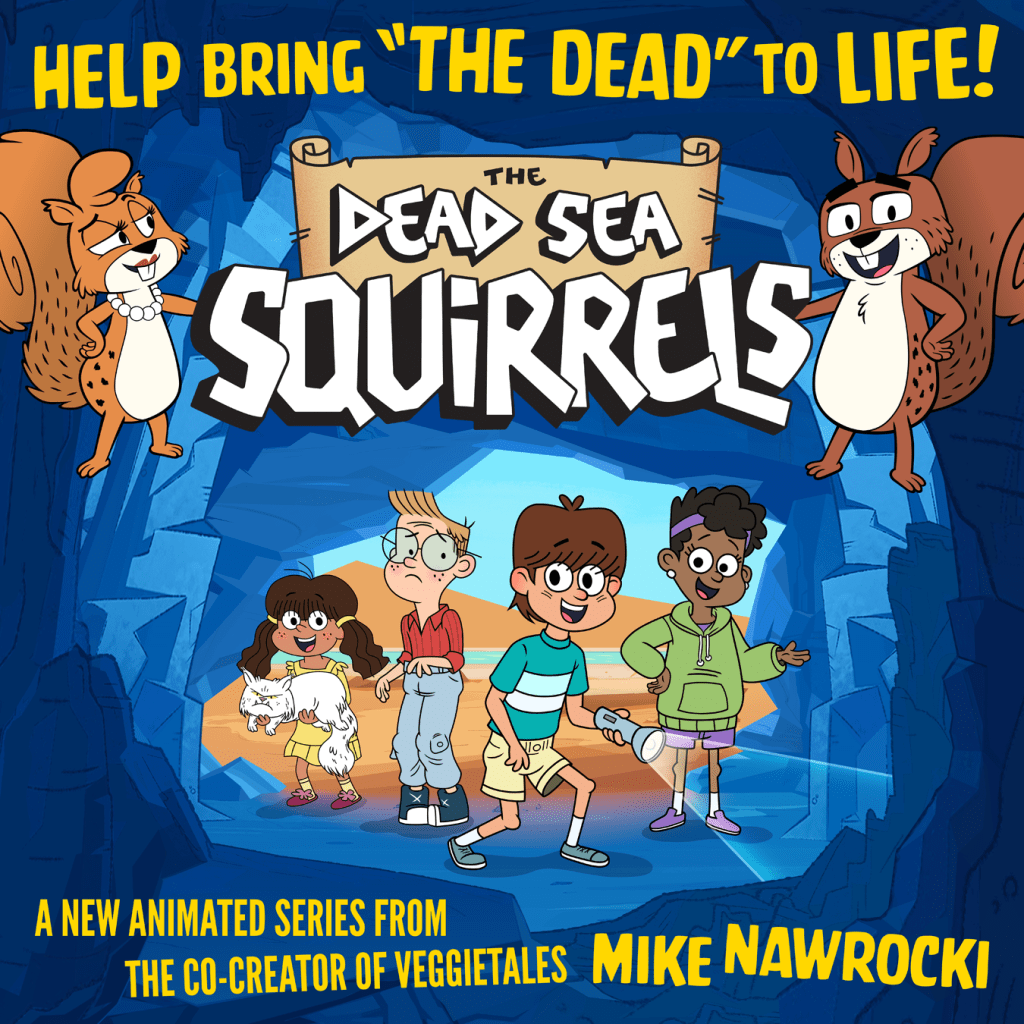
Mike Nawrocki’s new animated series The Dead Sea Squirrels is being released in 2025.
And then there is a new show with a teaser out, curiously entitled “The Phil and Mike Show.”

How did Phil and Mike define Christian movies? For once, VeggieTales proved that Christian media could compete with normal entertainment at the levels that really matter: quality of writing and entertainment value (fun). It gave Christianity a popular franchise that even once had a ride at a theme park (Dollywood)! And, for practicality, it reminded Hollywood that well-told Bible stories can make money.
It’s really just all about the quality of the execution.
Photo credits
- Phil portrait: https://www.puppetdude.com/single-post/phil-vischer-a-visionary
- Mike portrait: https://lipscomb.edu/directory/nawrocki-mike
- VeggieTales cast: https://veggietales.com/
- MTV Logo: https://wherecreativityworks.com/mtvs-iconic-logo/
- Love Story Lunt Twilight meme: https://au.pinterest.com/pin/543598617504554623/
- Tin Toy promo: Disneyplus.com
- YouTube: VeggieTales Official | VeggieTales | All the Songs from ‘Madame Blueberry’
- Dead Sea Squirrels promo: finchnwren.wordpress.com
- Film reel and clapperboard: Cleanpng.com
- Are You My Neighbour promo: apps.microsoft.com


One response to “The Guys who Created VeggieTales: Duos That Defined Christian Movies #02”
[…] The Guys who Created VeggieTales: Duos That Defined Christian Movies #02 […]