On the subject of abortion, the pro-life position aligns itself with nature and reality. The life that humans live from conception to natural death has a predictable progression through various stages of development. A couple have sex, a baby is created, then when the time comes, the baby is born. A mother naturally goes into labour. Her body knows what to do in order to give birth.
Therefore, the arguments for the pro-life position are logical, because there is concrete logic in reality. We know this through the study of science and maths. That’s why science can give a secular person a pro-life viewpoint, because the nature of human life is not just in religion, but also in the science of this world.
Science (the study of how the world works) and Christianity are not the same, but they complement each other. Because the God who made Christianity made the world.

The pro-abortion position is against the way nature works. It unnaturally interrupts the growth of a human being. In this way, it does not align with reality or the truth of nature. Therefore, the pro-abortion argument cannot rely on truth. Thus, in order to argue persuasively for the pro-abortion cause, they are required to use lies or other methods like emotional manipulation or alarmist language, to hide the truth.
Think of the pro-abortion camp’s euphemisms like ‘reproductive rights,’ ‘abortion is healthcare,’ ‘fetus’, and ‘clump of cells,’ that hide the truth of what is happening in a pregnancy.
Euphemism #1 | “Reproductive rights”
No one has the right to kill their offspring. Reproduction is the way a baby is created. No reproduction happens during an abortion.
Euphemism #2 | “Abortion is healthcare”
The purpose of healthcare is to save lives, not end them. To heal, not destroy. An abortion destroys the life of a baby. Therefore abortion is not healthcare.
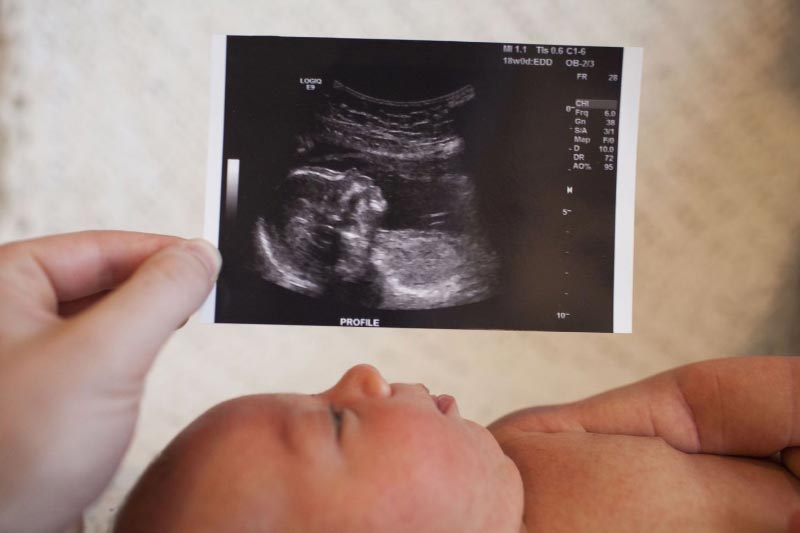
Euphemism #3 | “fetus”
A fetus is a term used to describe a normal human stage of development. Like ‘toddler,’ or ‘adolescent’. However the word is used to dehumanise babies. I have been told on social media, ‘There is no baby involved in an abortion. Only a fetus.’ In this way, ‘fetus’ is used as a way to mask the fact that in an abortion, a precious human being dies.
Euphemism #4 | “clump of cells”
With a term so vague as “clump”, this phrase is open to interpretation. Therefore, as others have said, every human is a clump of cells.
On pro-abortion social media, this euphemism is often paired with an image of a gestational sac. It looks like a mess of white tissue in a Petri dish. There is nothing in the photo that looks like a person.
That is because the photo – very trendy these days on the pro-abortion groove train – is just a gestational sac, and not an embryo. It doesn’t look like a human because there’s no human in the photo. They are deceiving us by saying that it’s a photo of an embryo. The footnotes of the main pro-abortion website that included this photo stated that it is just a gestational sac. I’m not making this up.
A real image of a baby in early stages of pregnancy actually looks like a small human. The fact that killing our babies is against the natural order, and that humans in general naturally feel compassion and protectiveness about babies, requires them to lie about what we are seeing in the photo of the gestational sac.

There’s a real baby inside her mother, which is how nature works. I want to be aligned with the truth, because truth describes what is really happening. The way the world really works.
I will leave you with two quotes from the 20th century author CS Lewis from his essay entitled The Poison of Subjectivism.
In reality, moral rules are directions for running the human machine. Every moral rule is there to prevent a breakdown, or a strain, or a friction, in the running of that machine. That is why these rules at first seem to be constantly interfering with our natural inclinations.
And later in the same essay:
‘Unless we return to the crude and nursery-like belief in objective values, we perish. If we do, we may live, and such a return might have one minor advantage. If we believed in the absolute reality of elementary moral platitudes, we should value those who solicit our votes by other standards than have recently been in fashion.’